
How to preserve Grandma’s recipe cards (and cook from them again)
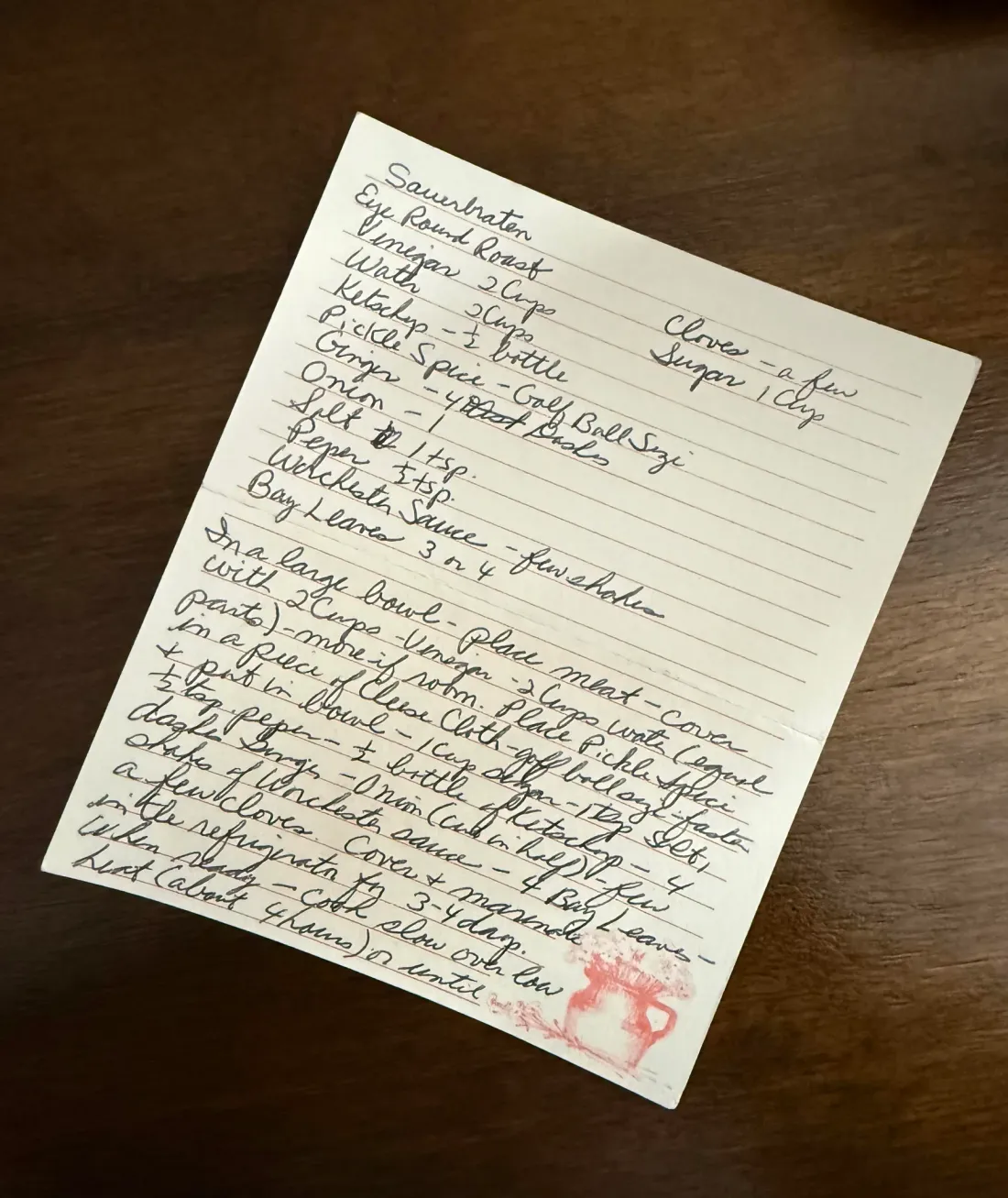
Somewhere in your family there is a recipe box. The cards are soft at the corners, spotted with butter and vanilla, and written in a hand you would know anywhere. They are some of the most personal things a family owns, and they are fragile. Here is how to keep them safe, get them into a form you can actually cook from, and pass them on.
1. Gather them in one place
Family recipes rarely live in one box. Look inside cookbooks, where cards and clippings get tucked between pages. Check envelopes, kitchen drawers, the inside of cupboard doors and the margins of church and community cookbooks. Then ask around: aunts, cousins and old family friends often have copies of the same recipe, sometimes with different notes. Those differences are part of the story, so keep every version.
2. Handle them gently
- Work with clean, dry hands, away from the stove and the sink.
- Take off paper clips, staples and rubber bands. Metal rusts and rubber breaks down, and both stain paper.
- Don’t tape torn cards. Tape yellows, its glue seeps into the paper, and it is very hard to remove later.
- Don’t laminate them. Lamination uses heat and adhesive, and it can’t be undone.
- If a card is brittle, slide a sheet of paper under it and lift it on that rather than by its edges.
3. Photograph or scan every card, front and back
A good image protects the recipe even if the card is lost or damaged, and it saves the handwriting itself. Always capture the back: that is where you find the notes like “double for the holidays” or “from Mrs. Kelly next door”.
- With a phone, use soft daylight near a window, out of direct sun. Hold the phone level above the card, fill the frame and turn off the flash.
- Put light cards on a plain, dark background (and dark cards on a light one) so the edges are clear.
- For the best archive copy, use a flatbed scanner at 600 dpi or higher and keep the original image files.
- Name the files so you can find them later, for example “Grandma Rose – apple cake – front”.
4. Write them out so you can cook from them
Old cards were written for someone who already knew the dish. Steps get skipped, oven temperatures are vague and some measurements have gone out of use. When you write a recipe out, keep the original wording next to it and add your notes, rather than replacing it. Here are the terms that come up most often:
| On the card | What it means |
|---|---|
| Slow oven | About 300–325°F (150–165°C) |
| Moderate oven | About 350–375°F (175–190°C) |
| Hot or quick oven | About 400–450°F (200–230°C) |
| Oleo | Margarine (butter works in most recipes) |
| Sweet milk | Ordinary whole milk, as opposed to buttermilk or sour milk |
| Scant cup | Slightly less than a full cup |
| Heaping spoonful | A rounded spoonful, more than level |
| Butter the size of an egg | About ¼ cup (4 tablespoons) |
| Teacup | Roughly ¾ cup |
| 1 can | Can sizes have changed over the years. Note the size if anyone remembers it. |
The best way to fill the gaps is to cook the recipe. Make it once exactly as written, then write down what you had to guess: the pan size, how long it really took, what “until done” looked like. If someone in the family made the dish with the original cook, ask them to make it with you.
5. Store the originals properly
- Use acid-free, archival sleeves or boxes. Look for products labeled “acid-free”, “lignin-free” or “PAT-passed” (the Photographic Activity Test).
- Keep them somewhere cool, dry and dark with a steady temperature. Attics, basements and the cupboard above the stove are the worst places.
- Keep them out of sunlight, which fades ink and pencil quickly.
- If you want a card on display, frame a printed copy and keep the original safe.
6. Share them with the family
Recipes are meant to be cooked. Once your cards are photographed and written out, share them: a printed family cookbook makes a wonderful holiday gift, and a shared digital copy means everyone has the recipe the next time they want to make it. Add the story too: who made the dish, for which occasions, and what people remember about it. The story is often what the family treasures most.
From our recipe box: Sauerbraten
Here is one of our own family cards, the Sauerbraten pictured at the top of this page. It shows exactly what old cards do. The pickling spice is measured as “golf ball size”, the ketchup as “½ bottle”, and a measurement for the ginger is crossed out and replaced with “4 dashes”. The last line runs off the card at “or until”, which is why you always photograph the back. Here it is written out, keeping the card’s own words:
Ingredients
- Eye round roast
- 2 cups vinegar
- 2 cups water
- ½ bottle ketchup
- Pickling spice, golf ball size [about 2–3 tablespoons]
- Ginger, 4 dashes
- 1 onion, cut in half
- 1 tsp salt
- ½ tsp pepper
- Worcestershire sauce, a few shakes
- 3 or 4 bay leaves
- A few cloves
- 1 cup sugar
Method
- In a large bowl, place the meat and cover it with 2 cups vinegar and 2 cups water (equal parts). Use more if needed to cover.
- Tie the pickling spice in a piece of cheesecloth, about golf ball size, and put it in the bowl.
- Add 1 cup sugar, 1 tsp salt, ½ tsp pepper, ½ bottle of ketchup, 4 dashes of ginger, the onion (cut in half), a few shakes of Worcestershire sauce, 4 bay leaves and a few cloves.
- Cover and marinate in the refrigerator for 3 to 4 days.
- When ready, cook slowly over low heat for about 4 hours, or until [tender]. The card ends at “or until”.
Notes for today’s kitchen: “pickle spice” is the pickling spice sold in jars, and a golf ball’s worth is about 2 to 3 tablespoons. Sauerbraten marinates for days, so start it midweek for a Sunday dinner.
How feedme.recipes helps
We built feedme.recipes for exactly this. Photograph a card, front and back, and it reads the handwriting and lays it out as ingredients and steps for you to check. The original photo stays attached to the recipe, so the handwriting is kept alongside the clean version. Add your notes, put the recipes in a collection such as “Grandma’s recipes”, and share a link with the family. Anyone with the link can see the recipe and add it to their own collection.